Deep dive Sivers SATCOM BFICs
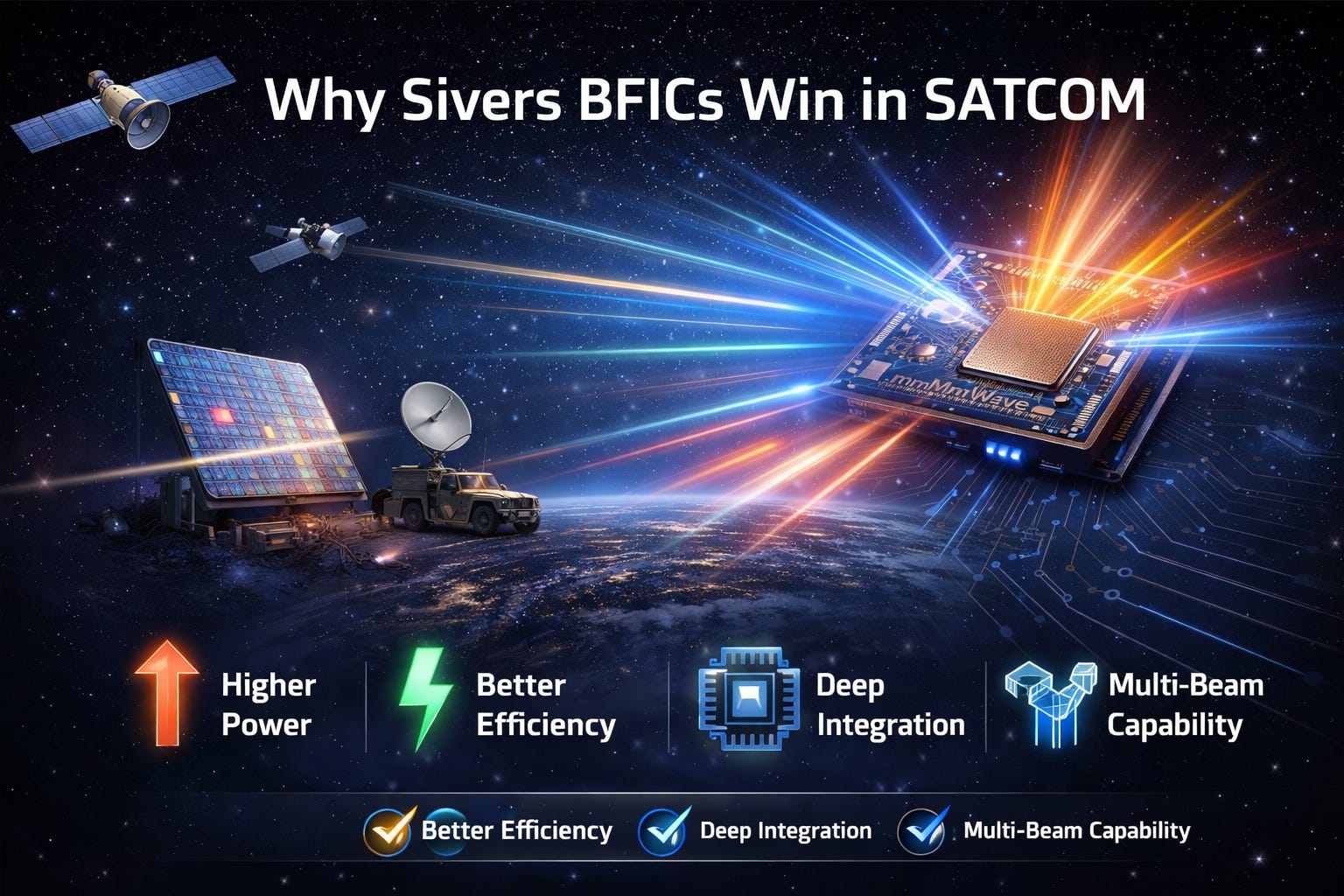
Why have all of Sivers customers chosen $SIVE Beamforming chips (BFIC)?

Introduction
One thing I’ve learned is to avoid going too deep into the technology stack when talking to investors.
Why? Because you scare investor off.
It’s a natural reaction — if you don’t understand what you’re investing in, the instinct is to say no.
This post is primarily for the tech crowd.
And for non-technical investors, instead look at who made that decision to use Sivers wireless BFICs:
Ericsson
Raytheon
All.Space
And many more..
These players have evaluated multiple suppliers — and still picked Sivers. They know better than us why. Hence focus your analysis on execution and market risk instead.
Biggest risk will be qualification (Photonics mostly) and yield (both BUs), which is directly connected to gross margins.
Anyway, here we go. ⤵️
The Real Question
Why are Sivers’ SATCOM beamforming ICs (BFICs) competitive — and in many cases preferred?
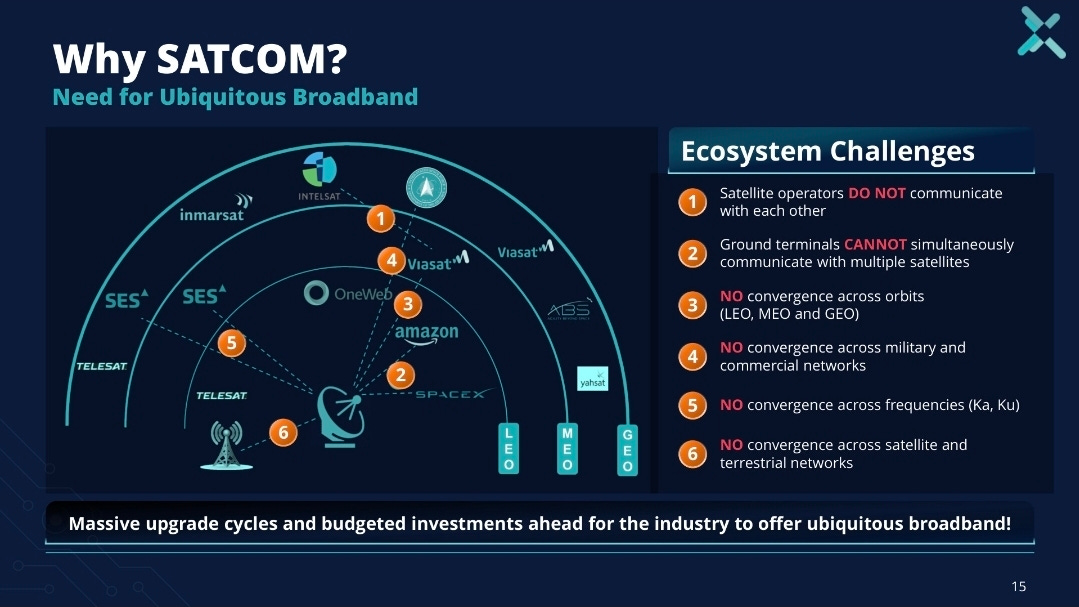
This is not about one feature. It’s about a system-level advantage and the new SATCOM constellations that Sivers can adress
1. Power: The Core Constraint in SATCOM
In satellite communications, everything starts with power.
Longer distance
Better link margin
More reliable connection
Sivers BFICs deliver high output power per channel. (based on best in class design and RF chips technology and Fab partner Global Foundries - GF)
This allows:
Fewer antenna elements
Smaller terminals
Lower total system cost
More power per chip = less hardware per system
2. Efficiency: The Real Differentiator
Power alone is not enough.
Efficiency determines whether the system actually works in real-world conditions.
Sivers focuses on:
High RF efficiency
Lower power consumption
Reduced thermal load
This matters in:
Mobile terminals
Airborne systems
Defense platforms
High efficiency = lower energy, less heat, better reliability
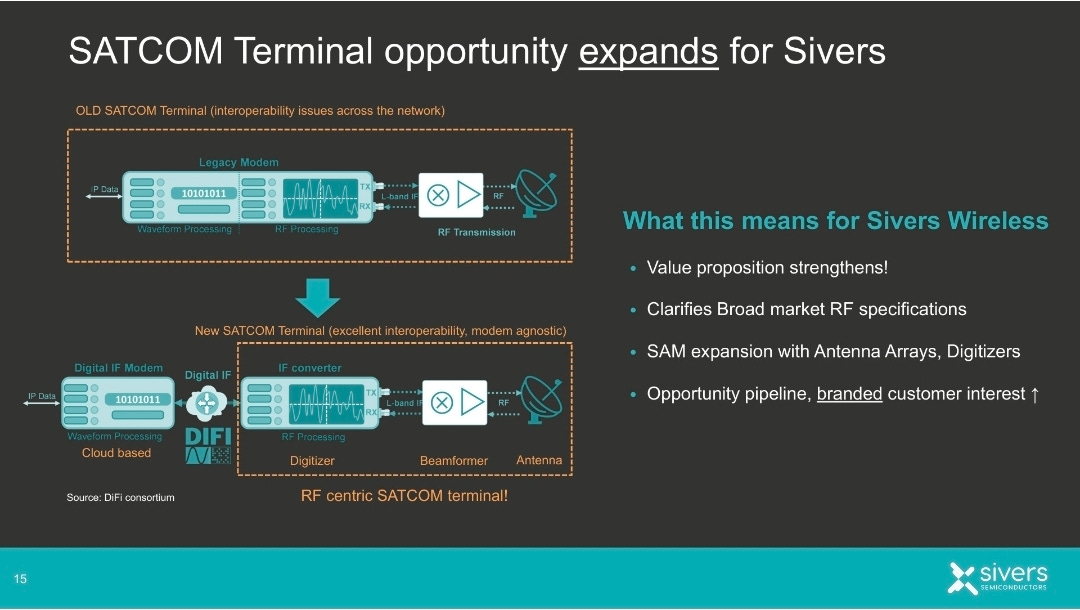
3. Integration: Reducing System Complexity
Traditional RF systems require multiple discrete components.
Sivers integrates:
Power amplifiers
Low-noise amplifiers
Phase shifters
Beam control
Digital control
All into a single BFIC.
Result:
Fewer components
Lower cost
Faster development cycles
Higher reliability
4. Beamforming: The Actual Value Driver
Beamforming is the core capability in modern SATCOM.
Sivers enables:
Narrow, directed beams
Higher spectral efficiency
Reduced interference
Improved security
Market ledning bandwidth (Ka-band and Ku-band) in single chip
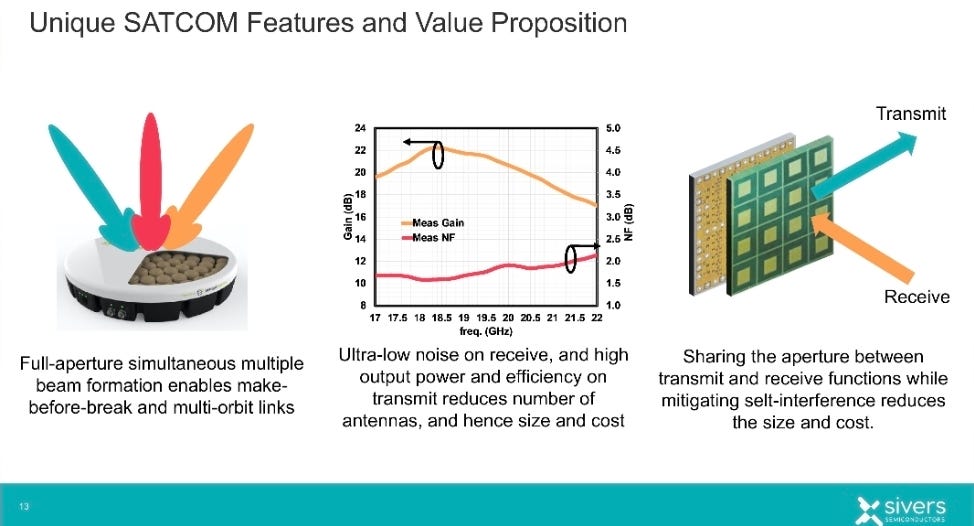
5. Multi-Beam Capability
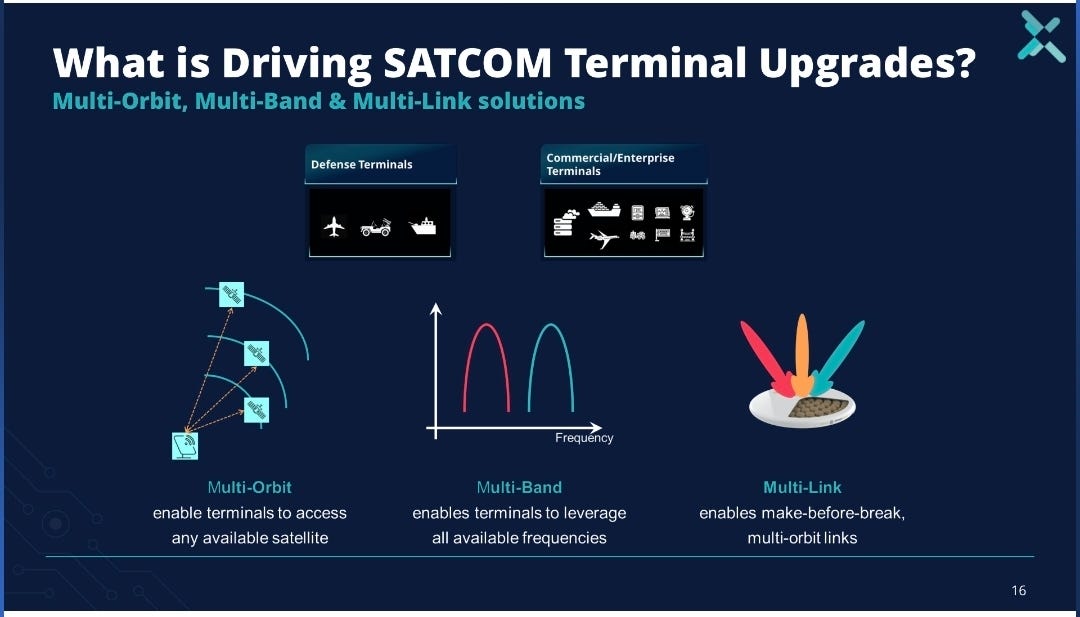
Modern satellite systems require:
Tracking multiple satellites
Switching between orbits
Maintaining continuous connectivity
Sivers supports:
Multi-beam operation
Seamless handovers
Critical for multi-band simultaneously GEO, MEO, LEO constellations and next-gen networks for DoD secure make before break communication.
6. Manufacturability (Underrated)
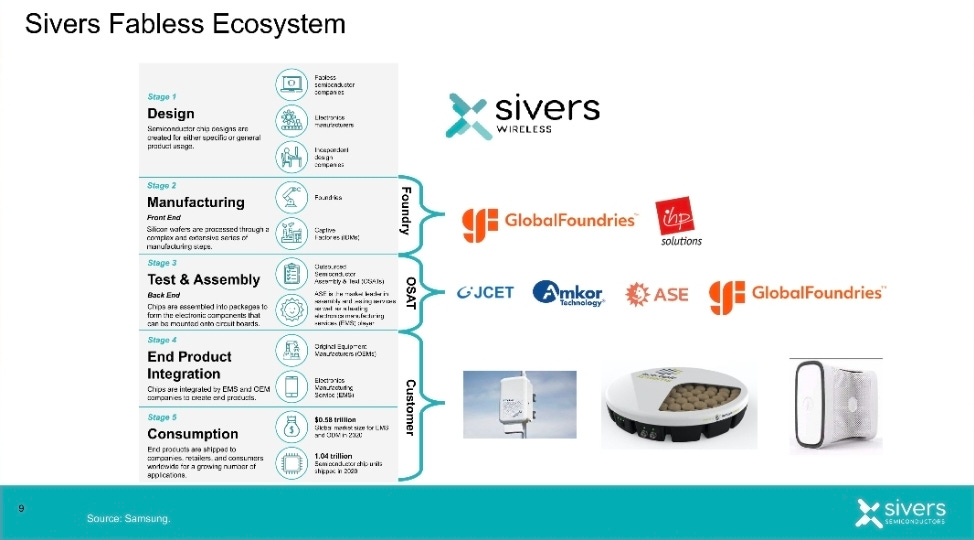
Great tech is useless if it can’t scale.
Sivers BFICs are:
Built on RF-SOI platforms
Calibrated at chip level
Designed for high-volume production
Qualification on standard technologies form GF
This is not just lab performance — it’s deployable at scale
7. Deep-Tech Origin
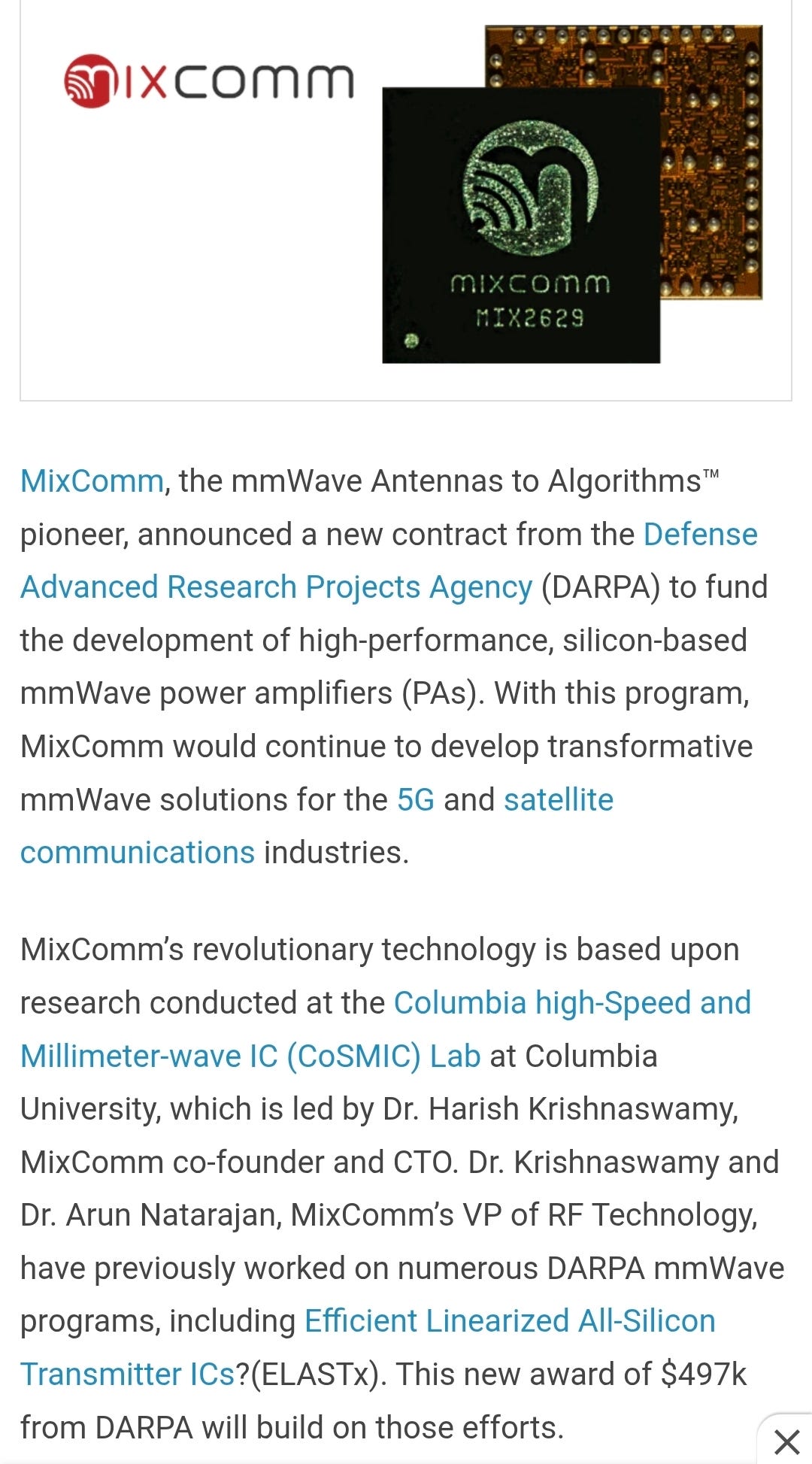
The BFIC technology originates from:
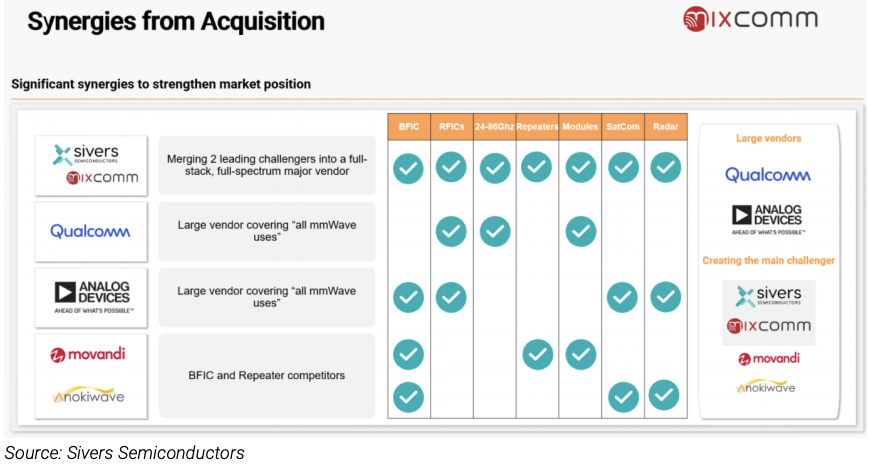
MixComm
Advanced mmWave research at Columbia University
Many years of R&D
DARPA-backed programs
This is not the best of the best technology -state of the art technology.
The Key Insight
Sivers’ advantage is not one metric.
It is the combination:
High power
High efficiency
Deep integration
Beamforming performance - broad bandwidth
Highly integrated BFIC
Scalable manufacturing
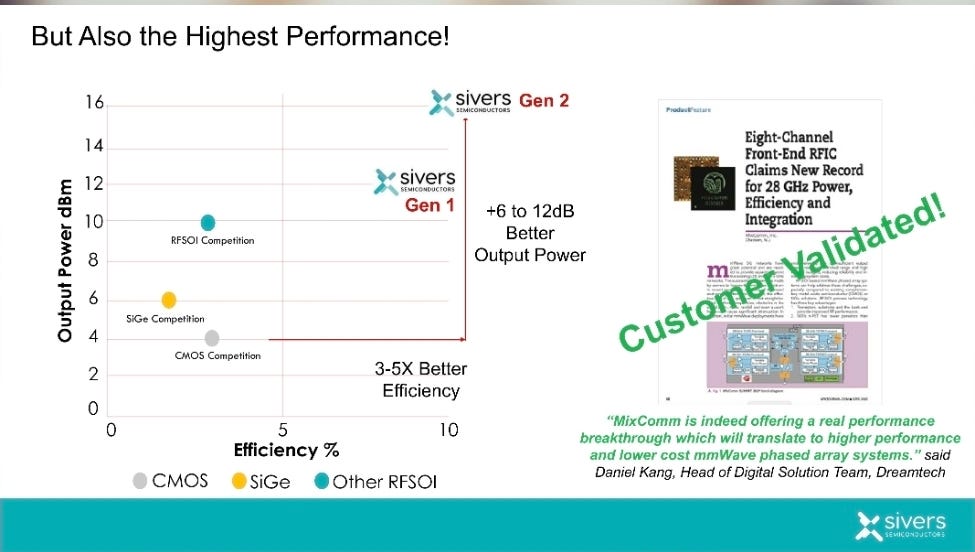
That combination is what wins real-world SATCOM programs.
Final Thoughts
If you are not technical: Don’t try to reverse-engineer the chip. Instead, look at who is choosing it. Because in markets like this: The best validation for deep tech is not theory — it’s adoption and to look at who has adopted it.
Anders Storm
Disclaimer: This newsletter is NOT investment advice. The aim of this newsletter is to provide subscribers with basic and simplified insights about the semiconductor industry and its participants. Articles will be published semi-frequently.